The early signs of perimenopause often start years before your periods become irregular. Many women in their late 30s and early 40s experience subtle symptoms they attribute to stress, poor sleep, or just "getting older," when in fact their hormones are already shifting. Recognizing these early signs helps you understand what is happening and take proactive steps.
This article is for informational purposes only and is not medical advice. Always consult a healthcare provider about your symptoms.
When Does Perimenopause Actually Start?
Most women enter perimenopause between ages 40 and 44, though it can start as early as the mid-30s. The hormonal shifts begin gradually. Progesterone is often the first hormone to decline, sometimes years before estrogen follows. This means the earliest symptoms are often linked to low progesterone rather than the hot flashes typically associated with low estrogen.
The Study of Women's Health Across the Nation (SWAN), which has followed over 3,000 women through the menopausal transition, found that the median age of perimenopause onset is 47, but the range extends from the late 30s to the early 50s. Because the transition is so gradual, many women are already in perimenopause for one to two years before they realize it.
What are the 10 earliest signs of perimenopause?
1. Your Cycle Length Changes
Before periods start skipping, they often get shorter. If your cycle was reliably 28-30 days and it starts coming every 24-26 days, this is one of the earliest measurable signs of hormonal change. It happens because the follicular phase (the first half of your cycle) shortens as your ovaries respond differently to follicle-stimulating hormone (FSH).
Conversely, some women notice cycles becoming longer or more variable — 25 days one month, 35 the next. Any consistent change from your personal baseline is worth noting.
2. Sleep Becomes Unreliable
If you used to fall asleep easily and now find yourself lying awake at 2 a.m. with a racing mind, declining progesterone may be the culprit. Progesterone promotes sleep by enhancing the effect of GABA, your brain's primary calming neurotransmitter. As progesterone drops, sleep quality often degrades before other symptoms appear.
This is different from the night sweats that come later — in early perimenopause, you might simply find that your sleep is lighter, you wake up more often, or you feel unrested despite spending enough time in bed.
3. Anxiety Appears or Intensifies
New-onset anxiety is one of the most common and most overlooked early signs of perimenopause. Many women visit their doctor for anxiety and leave with a prescription for anti-anxiety medication, never learning that hormonal shifts might be driving the change. Estrogen and progesterone both modulate serotonin and GABA, so even small hormonal fluctuations can significantly impact anxiety levels.
A 2019 study in Menopause found that anxiety symptoms increase significantly during the early perimenopause stage, often before vasomotor symptoms like hot flashes appear.
4. Your Periods Get Heavier
Counter to what many expect, periods often get heavier before they get lighter or stop. In early perimenopause, estrogen can spike higher than normal while progesterone drops, causing the uterine lining to build up more than usual. The result is heavier flow, more clots, and longer periods.
If you are suddenly going through more pads or tampons than you used to, or your periods have extended from five days to seven or eight, this could be an early hormonal sign.
5. Brain Fog Creeps In
Difficulty concentrating, forgetting words, misplacing things more often, or feeling mentally sluggish. Estrogen plays a direct role in cognitive function, supporting neurotransmitter activity in the hippocampus and prefrontal cortex. When estrogen starts fluctuating, many women notice subtle cognitive changes.
A 2012 study published in Menopause followed women through the transition and confirmed that cognitive complaints peak during late perimenopause, but many women report the first hints of brain fog years earlier.
6. PMS Gets Worse
If your premenstrual symptoms were always manageable and suddenly they are not — more bloating, worse mood swings, breast tenderness that lasts a week — hormonal imbalances are likely responsible. The estrogen-progesterone ratio shifts in early perimenopause, amplifying PMS symptoms even when your cycle still seems regular.
7. Energy Drops Without Explanation
Persistent fatigue that does not improve with rest is a hallmark of early perimenopause. It is driven by the combination of subtly disrupted sleep, hormonal fluctuation, and the metabolic changes that accompany the transition. Many women describe it as a "bone tiredness" that is different from normal tiredness.
8. You Feel More Emotional
Crying more easily, getting more frustrated than usual, or feeling emotionally volatile can all signal early hormonal changes. Estrogen and progesterone directly influence the emotional regulation centers of the brain. Small shifts in these hormones can create outsized emotional responses.
9. Headaches Change Pattern
If you get menstrual headaches or migraines, you might notice them becoming more frequent, more severe, or appearing at different times in your cycle. Women who never had menstrual headaches might start getting them. Estrogen withdrawal is a known migraine trigger, and the hormonal instability of perimenopause creates more frequent estrogen drops.
10. Subtle Temperature Regulation Changes
Before full-blown hot flashes, many women notice they feel warmer than usual, are more sensitive to heat, or occasionally flush in situations where they did not before. You might start throwing off blankets at night or feeling uncomfortably warm in rooms where others are comfortable. These are mini hot flashes — precursors to the more intense vasomotor symptoms that may develop later.
Why do early perimenopause signs get missed?
The main reason early perimenopause signs go unrecognized is that they overlap with so many other explanations. Stress causes anxiety and poor sleep. Aging affects memory and energy. A busy life makes it easy to dismiss subtle changes. Additionally, many women (and some healthcare providers) associate perimenopause primarily with hot flashes and missed periods, which are actually later-stage symptoms.
The average woman visits three to four doctors before receiving a perimenopause-related explanation for her symptoms. This delay is one reason consistent symptom tracking matters. When you can look back over weeks or months and see a pattern of worsening sleep, increasing anxiety, heavier periods, and brain fog all happening together, the picture becomes much clearer.
What Are the First Signs of Perimenopause?
If you had to pick the single earliest sign that perimenopause has begun, the answer for most women is one of three things: cycle length shortening by 5-7 days, a new pattern of waking around 2-4 a.m., or worse PMS that feels different from what you've had before. These three appear years before periods become visibly irregular, hot flashes start, or anything else that gets labeled "perimenopause" in popular media.
The reason these three come first: progesterone declines before estrogen does. The early sleep changes, the late-luteal anxiety bump, and the cycle shortening all reflect dropping progesterone in the second half of your cycle while estrogen levels still look normal-ish on a blood test. This is why blood tests so often come back "normal" in early perimenopause — they're measuring the wrong window.
The Subtle Signs Most Women Miss
Beyond the classic three, several quieter signals frequently show up first and get attributed to other causes:
- New temperature reactivity — feeling warmer than the room temperature warrants, especially in the second half of your cycle. Not full hot flashes yet, just feeling thermally off.
- Lower stress tolerance — the same workload now produces more fatigue or irritability than it used to.
- Heart palpitations after caffeine when you tolerated the same amount before.
- Word-finding pauses in conversation that didn't happen six months ago.
- Sensitivity to alcohol — one glass now produces the next-day hangover that used to require three.
- Cycle-tied joint stiffness in the week before periods.
- New histamine reactions — itchy skin, sneezing, mild rashes that didn't happen before. Estrogen-histamine interactions can flare in perimenopause.
Each one in isolation is easy to dismiss. The pattern of multiple subtle changes happening together over 6-12 months is the actual early signal.
Can Perimenopause Start at 35? At 38?
Yes to both, though it's less common. About 5% of women begin perimenopause before age 40 — what's classified as "early perimenopause." If it starts before age 40 and progresses to menopause before age 40, it becomes "premature ovarian insufficiency" (POI) — a diagnosis that warrants endocrinology referral because of long-term bone and cardiovascular implications without estrogen replacement.
Risk factors for early-onset perimenopause:
- Genetics (mother or sister had early menopause)
- Smoking (advances timeline by ~2 years on average)
- Autoimmune conditions (thyroid, lupus, type 1 diabetes)
- Prior ovarian surgery
- Chemotherapy or pelvic radiation
- Fragile X premutation
If you're under 40 and notice multiple early perimenopause signs, get evaluated. AMH and FSH bloodwork plus a pelvic ultrasound to assess antral follicle count gives a much clearer picture in this age range than in older women.
What should you do if you recognize early perimenopause signs?
Recognizing early perimenopause is empowering, not alarming. Here is what helps:
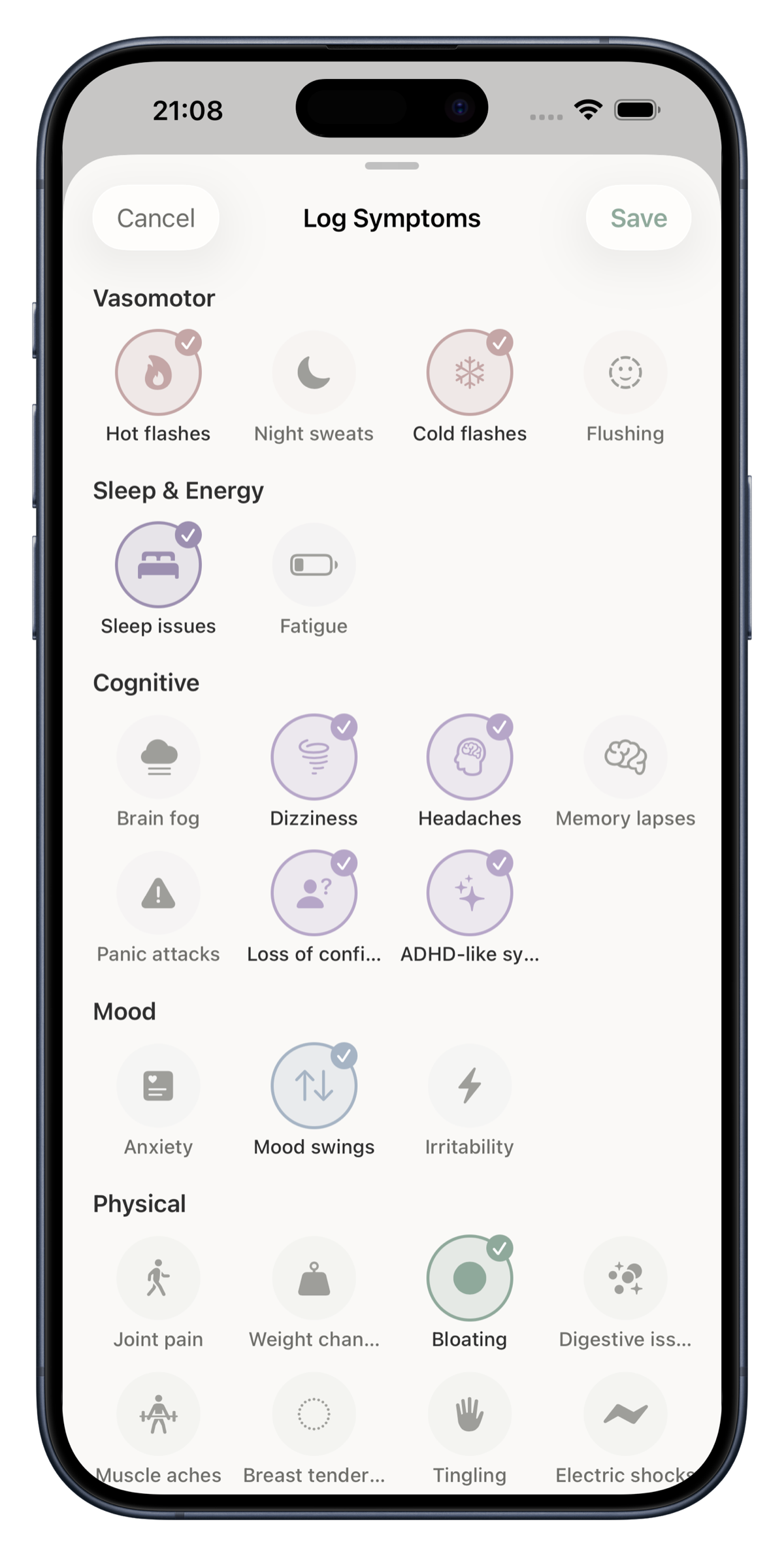
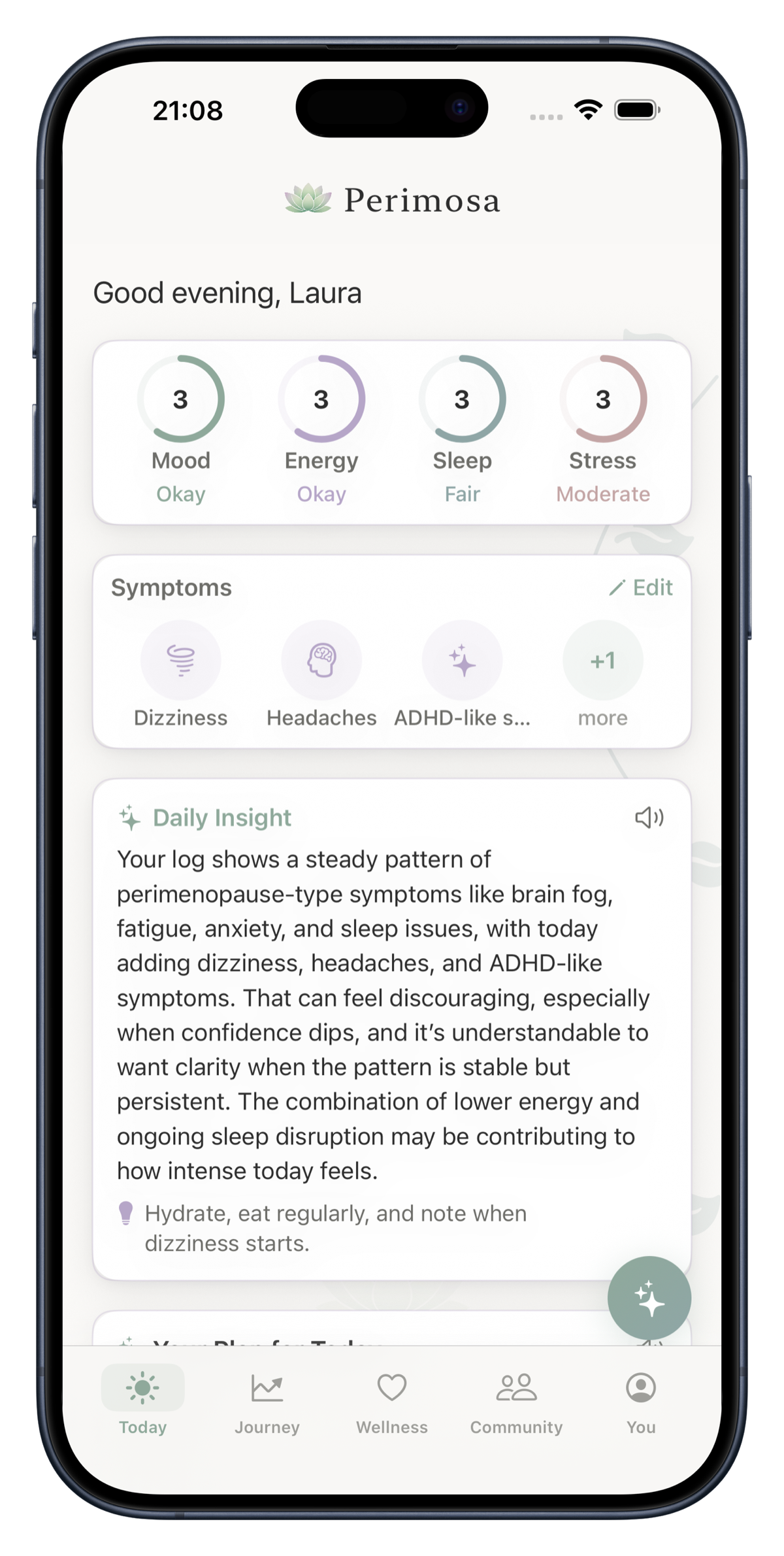
- Start tracking. Log your symptoms, cycle changes, and how you feel daily. Even a few weeks of data reveals patterns. Perimosa is designed specifically for perimenopause tracking, making it easy to log 30+ symptoms and see how they connect over time.
- Talk to your doctor. Bring your tracking data. A good conversation starter: "I've noticed these changes over the past few months and I'm wondering if they could be hormone-related."
- Prioritize sleep. Since sleep disruption drives so many other symptoms, protecting your sleep routine is one of the highest-leverage interventions.
- Manage stress proactively. Cortisol and hormonal fluctuations amplify each other. Mindfulness, exercise, and stress-reduction practices help buffer the transition.
- Adjust expectations. Knowing that your symptoms have a physiological cause can reduce the secondary stress of wondering what is wrong with you.
The Bottom Line
Perimenopause does not start with a bang. It starts with subtle shifts — a little more anxiety, a little less sleep, periods that are just slightly different. Recognizing these early signs gives you the opportunity to understand the transition, prepare for what may come next, and get support before symptoms become overwhelming. You are not imagining it, and you are not just stressed. Your body is changing, and that is completely normal.