Perimenopause brings far more than hot flashes and irregular periods. There are at least 34 documented symptoms of perimenopause, affecting everything from your sleep and mood to your joints, digestion, and cognitive function. Many women experience symptoms for years before realizing they are related to hormonal changes. This guide covers every known perimenopause symptom, explains why it happens, and helps you understand what is normal.
This article is for informational purposes only and is not medical advice. Always consult a healthcare provider about your symptoms.
Why Does Perimenopause Cause So Many Symptoms?
Estrogen receptors exist in nearly every organ and tissue in your body, from your brain and heart to your skin, bones, and gut. When estrogen levels start fluctuating during perimenopause, the effects ripple through multiple body systems simultaneously. Progesterone also declines, often faster than estrogen, creating an imbalance that affects sleep, mood, and menstrual patterns. This is why perimenopause can feel like your entire body is changing at once — because, in a sense, it is.
According to the Study of Women's Health Across the Nation (SWAN), the average perimenopause transition lasts about four years, though it can range from a few months to over a decade. During that time, symptoms can come and go unpredictably, making it difficult to connect the dots without tracking.
How common is each perimenopause symptom?
The table below shows the prevalence of the most-reported perimenopause symptoms, based on published estimates from the SWAN study and the North American Menopause Society (NAMS).
| Symptom | % of perimenopausal women affected | Primary source |
|---|---|---|
| Irregular periods | ~90% | SWAN |
| Hot flashes | ~75% | SWAN / NAMS |
| Sleep disturbance / insomnia | 40-60% | NAMS |
| Mood changes (anxiety, irritability, low mood) | ~45% | SWAN |
| Brain fog / cognitive symptoms | 40-50% | SWAN |
| Joint pain / stiffness | ~50% | NAMS |
| Weight gain / changes in body composition | ~60% | NAMS |
| Hair thinning | ~40% | Dermatology literature |
| Vaginal dryness | ~40% | NAMS |
| Heart palpitations (benign) | 20-40% | NAMS |
What are the 34 symptoms of perimenopause?
Menstrual Changes (Symptoms 1-4)
1. Irregular periods. This is typically the first and most obvious sign. Cycles may become shorter (21 days), longer (35+ days), or skip months entirely. The SWAN study found that 90% of women experience menstrual irregularity during perimenopause.
2. Heavier periods. Fluctuating estrogen can cause the uterine lining to build up more than usual, leading to heavier or prolonged bleeding. Some women soak through a pad or tampon every hour for several hours.
3. Lighter periods. Conversely, some cycles produce very light flow as hormone levels dip. You might experience spotting rather than a full period.
4. Spotting between periods. Mid-cycle spotting becomes more common as ovulation becomes less predictable. While usually harmless, persistent spotting should be evaluated by a doctor.
Vasomotor Symptoms (Symptoms 5-7)
5. Hot flashes. A sudden wave of heat, usually starting in the chest or face and spreading outward. About 75% of perimenopausal women experience hot flashes, which can last 30 seconds to 10 minutes. Declining estrogen disrupts the hypothalamus, your body's thermostat.
6. Night sweats. Hot flashes that happen during sleep, often severe enough to soak through sheets and pajamas. Night sweats can fragment sleep even when you don't fully wake up, leading to daytime fatigue.
7. Cold flashes. Less discussed but surprisingly common, cold flashes are sudden chills or a sensation of being intensely cold. They can follow a hot flash or occur independently.
Sleep Disruptions (Symptoms 8-10)
8. Insomnia. Difficulty falling asleep, staying asleep, or waking too early. Declining progesterone (a natural sedative) is a major factor. The North American Menopause Society reports that 40-60% of perimenopausal women experience sleep problems.
9. Restless sleep. Even when you sleep through the night, sleep quality often declines. You may spend less time in deep, restorative sleep stages.
10. Sleep apnea onset or worsening. Hormonal changes can affect the muscles of the upper airway. Research shows that the risk of obstructive sleep apnea increases significantly during perimenopause.
Mood and Emotional Changes (Symptoms 11-16)
11. Anxiety. New-onset anxiety or a significant increase in existing anxiety is extremely common. Estrogen modulates serotonin and GABA, two neurotransmitters critical for calm and emotional regulation.
12. Depression. Women in perimenopause are two to four times more likely to experience a major depressive episode than premenopausal women, according to research published in the Archives of General Psychiatry.
13. Irritability and rage. Sudden, intense anger that feels disproportionate to the trigger. Progesterone's calming effect diminishes during perimenopause, while cortisol (the stress hormone) may increase.
14. Mood swings. Rapid emotional shifts from happy to tearful to frustrated within hours. Fluctuating estrogen directly affects neurotransmitter balance.
15. Crying spells. Unexpected bouts of crying without an obvious cause, or crying more easily than usual at things that wouldn't normally affect you.
16. Low motivation. A general sense of apathy or reduced drive that can affect work, hobbies, and relationships. This is related to changes in dopamine pathways influenced by estrogen.
Cognitive Symptoms (Symptoms 17-19)
17. Brain fog. Difficulty concentrating, fuzzy thinking, or feeling mentally sluggish. The SWAN study found that cognitive difficulties peak during the late perimenopause stage.
18. Memory lapses. Forgetting words, names, why you walked into a room, or where you put things. Estrogen supports hippocampal function (your memory center), so fluctuations temporarily impair recall.
19. Difficulty finding words. A specific type of memory issue where the word you want is "on the tip of your tongue" but you cannot retrieve it. This is one of the most frustrating cognitive symptoms.
Physical Symptoms (Symptoms 20-28)
20. Joint pain and stiffness. Estrogen has anti-inflammatory properties, so declining levels can increase joint inflammation. Many women first notice stiffness in the hands, knees, or hips upon waking.
21. Muscle tension and aches. Generalized body aches that feel like you have the flu. This can be related to both hormonal changes and the sleep disruption that accompanies them.
22. Headaches and migraines. Hormonal headaches may increase in frequency or severity. Women who had menstrual migraines often find them worsening during perimenopause.
23. Heart palpitations. A racing, fluttering, or pounding heartbeat that can be alarming. Estrogen affects the electrical system of the heart, and fluctuations can cause benign arrhythmias.
24. Digestive changes. Bloating, gas, slower digestion, or changes in bowel habits. Estrogen receptors in the gut influence motility and the gut microbiome.
25. Weight gain, especially around the middle. Shifts in estrogen and progesterone promote visceral fat storage. Even without changing diet or exercise habits, many women gain 5-10 pounds during perimenopause.
26. Breast tenderness. Sore, swollen, or lumpy breasts, especially before periods. Fluctuating estrogen stimulates breast tissue unpredictably.
27. Dizziness. Brief episodes of lightheadedness or vertigo. This can be related to blood pressure fluctuations, inner ear changes, or vasomotor instability.
28. Tinnitus. Ringing, buzzing, or humming in the ears. Emerging research suggests a link between estrogen fluctuations and changes in auditory processing.
Skin, Hair, and Tissue Changes (Symptoms 29-32)
29. Dry skin. Estrogen helps maintain skin hydration and collagen production. As it declines, skin may become drier, thinner, or more prone to itching.
30. Hair thinning. Reduced estrogen relative to androgens can cause diffuse hair thinning, particularly at the temples and crown. About 40% of women notice hair changes during perimenopause.
31. Vaginal dryness. Declining estrogen thins vaginal tissues and reduces natural lubrication, which can cause discomfort during intercourse and increase the risk of urinary tract infections.
32. Changes in body odor. Hormonal shifts can alter sweat composition and the bacteria on your skin, sometimes changing how you smell to yourself.
Other Symptoms (Symptoms 33-34)
33. Reduced libido. Changes in estrogen and testosterone can decrease sexual desire. This is compounded by other symptoms like fatigue, vaginal dryness, and mood changes.
34. Electric shock sensations. Brief, sudden sensations of electrical buzzing under the skin or in the extremities. While startling, these are related to nervous system changes caused by fluctuating hormones.
How do you know if your symptoms are perimenopause?
There is no single test that definitively diagnoses perimenopause. Hormone levels fluctuate too much day to day for a blood test to be reliable. Instead, the diagnosis is typically made based on your age, symptom pattern, and menstrual history.
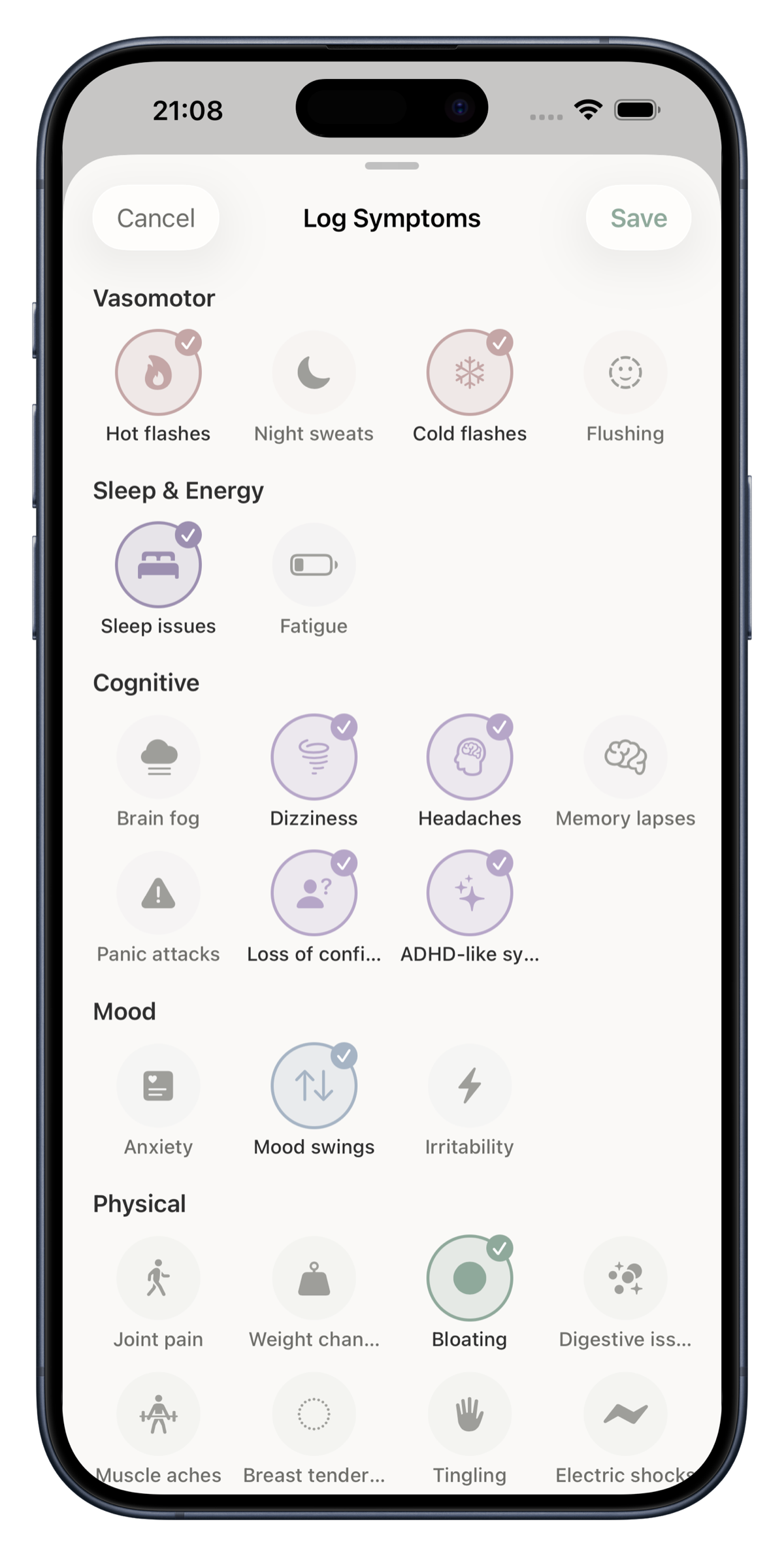
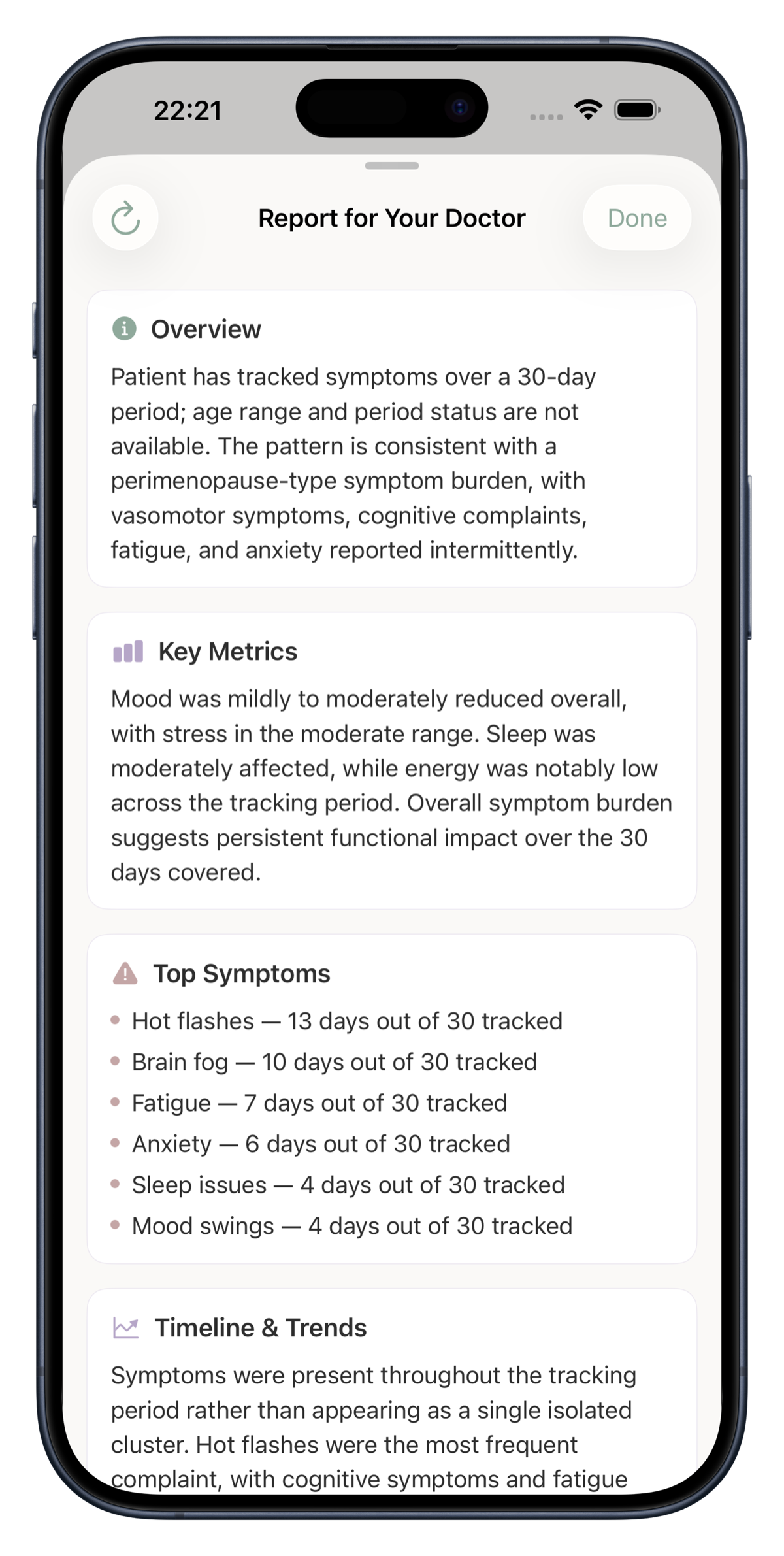
This is why tracking your symptoms consistently is so valuable. When you can show a healthcare provider three months of data showing that your hot flashes cluster before your period, or that your anxiety spikes every other week, you move from vague complaints to concrete patterns. Apps like Perimosa are designed specifically for this kind of perimenopause symptom tracking, letting you log 30+ symptoms with severity levels and see how they connect over time.
When Should You See a Doctor?
Most perimenopause symptoms are a normal part of the hormonal transition. However, you should see a healthcare provider if you experience:
- Very heavy bleeding (soaking through a pad every hour for several hours)
- Bleeding after sex
- Periods that last longer than seven days
- Bleeding after 12 months with no period (postmenopausal bleeding)
- Symptoms that significantly impair your daily life
- Heart palpitations accompanied by chest pain, shortness of breath, or fainting
- Severe depression or anxiety
How do you manage multiple perimenopause symptoms at once?
When you are dealing with 5, 10, or even 20 symptoms simultaneously, it helps to identify which ones bother you most and focus there first. Some strategies that address multiple symptoms at once include:
- Regular exercise — improves sleep, mood, cognitive function, and helps manage weight
- Stress management — reduces cortisol, which worsens many perimenopause symptoms
- Consistent sleep routine — better sleep improves mood, brain fog, and pain tolerance
- Anti-inflammatory diet — rich in omega-3s, vegetables, and whole grains to reduce joint pain and support hormonal balance
- Symptom tracking — understanding your patterns helps you anticipate and prepare for symptom flares
Many women find that once they start tracking, they notice connections they missed before. Sleep quality predicts next-day brain fog. Stress spikes precede hot flash clusters. Cycle phase correlates with joint pain. These patterns become visible only with consistent tracking over weeks and months.
The Bottom Line
Perimenopause is not just hot flashes. It is a whole-body transition that can produce over 34 distinct symptoms, many of which are widely misunderstood or misattributed to stress, aging, or other conditions. Knowing the full range of symptoms helps you recognize what is happening and take informed action.
If you want to start understanding your own symptom patterns, Perimosa lets you track all 34+ perimenopause symptoms daily, spot patterns with AI-powered analysis, and bring clear data to your doctor visits. Because you should not have to guess what your body is doing.